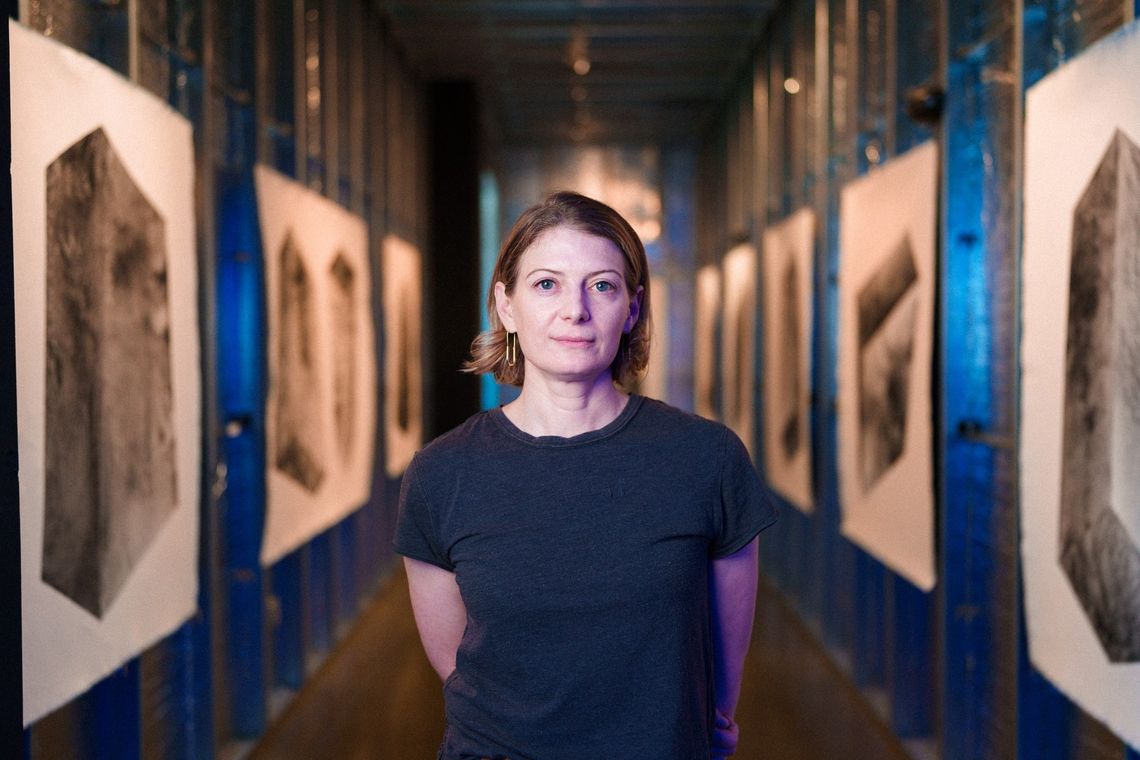
Barbara Goszczynska turns garbage into something you want to step inside. The Polish-born, Brooklyn-based artist works with salvaged plastic bags, fishing nets, and beach debris, the leftovers of consumer life, and builds them into glowing, cave-like exhibits. She calls herself an "artivist," and the strategy is deliberate: color and scale pull you in first, and the environmental math lands afterward. She is drawn to the patina plastic picks up from sun and seawater, and uses that beauty to make people feel something about waste that statistics cannot.
Beauty in what we throw away.
She holds a BFA from the School of the Art Institute of Chicago and an MFA from Mason Gross School of the Arts at Rutgers. She started in animation, winning an Audience Choice Award at the Woods Hole Film Festival, then moved toward sculpture in grad school because she wanted her hands on the materials that obsessed her. Rainbow Cave, her signature work, has appeared at Arcadia Earth in New York (44,000 bags, still on view) and Art Basel Miami Beach, and she has made commissioned sculptures for Mohawk Group, Corona USA, and Oceanic Global. The New York Times, Forbes, Vogue, ArtNet, and AFAR have all covered her work.
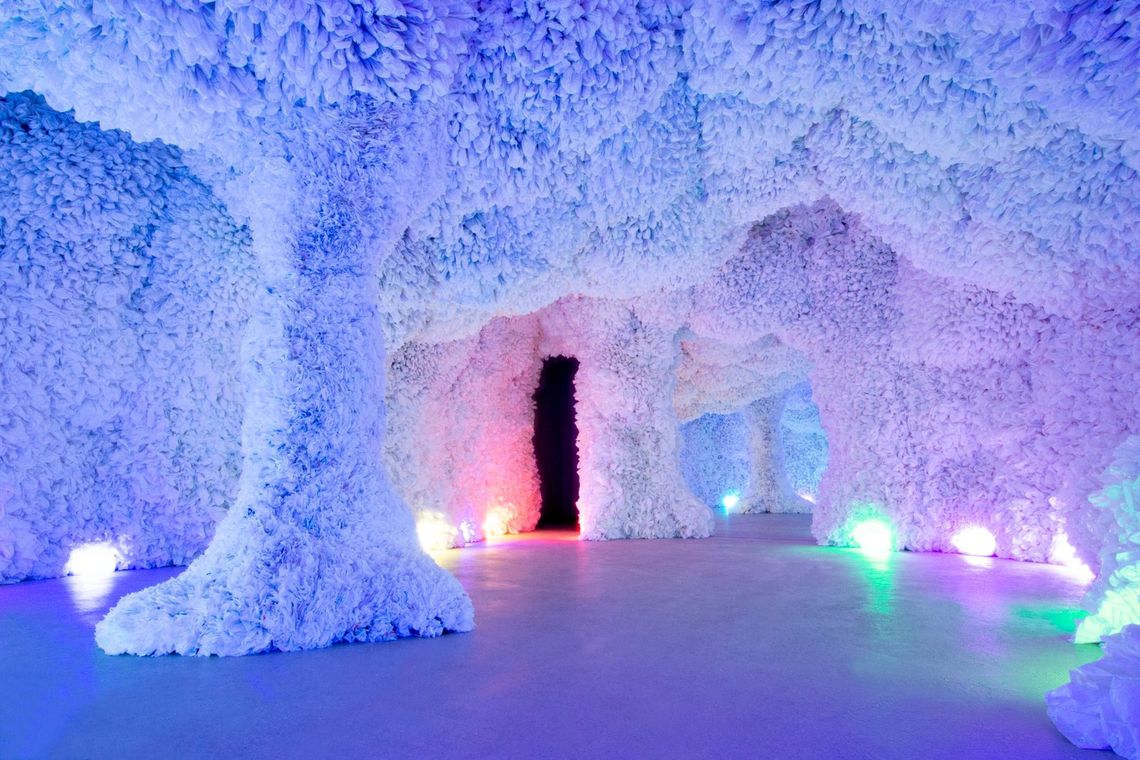
At Hopscotch, Rainbow Cave is the exhibit that feels like the inside of a jewel. The San Antonio version, open since October 2020, is built from roughly 40,000 salvaged bags, the number Texans use every two and a half minutes. Portland's, open since June 2023, uses about 86,000, which is how many the United States goes through every 27 seconds. Every bag was placed by hand.
Portland's is the sixth Rainbow Cave she has built. Each is different, each carries its own statistic, and each draws on the same two old stories, Plato's cave and the Biblical flood, retold in plastic.