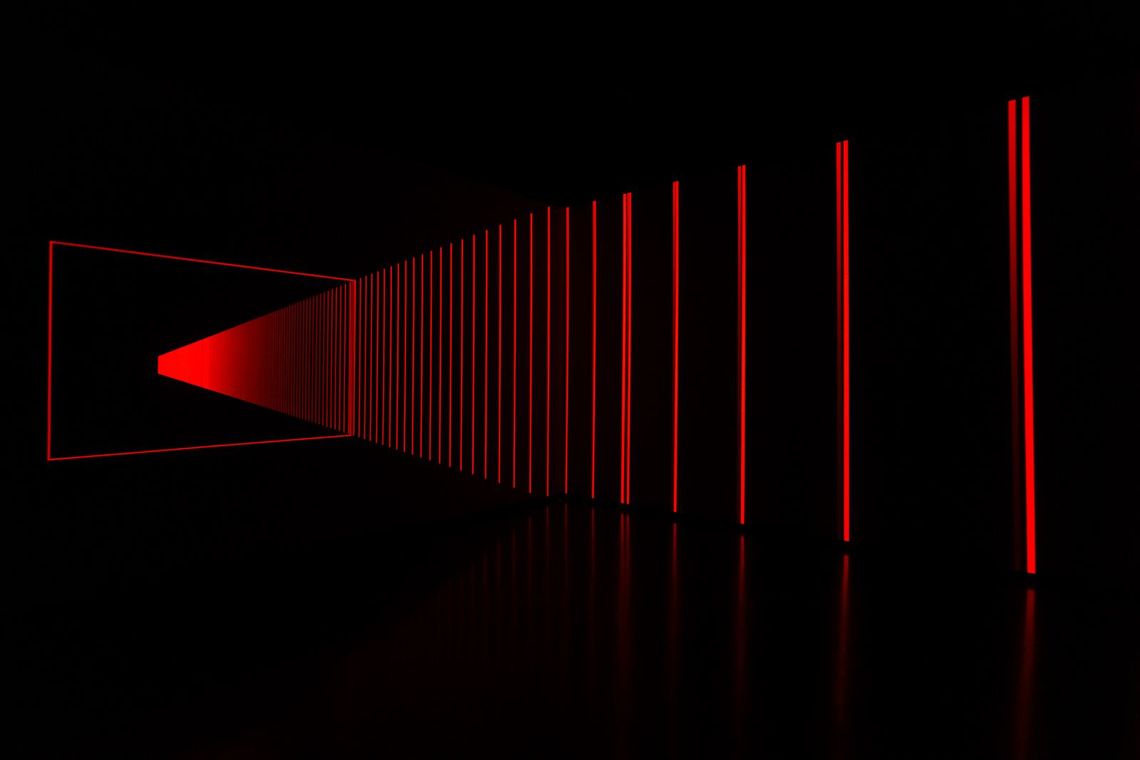
Olivier Ratsi has spent two decades making space lie to you. The French artist works in anamorphosis, the centuries-old technique of distorting an image so it only resolves from one exact vantage point. Stand in one of his exhibits and move until everything snaps into place. It is a physical argument about how perspective shapes reality, sharpened since the late 1990s. He treats reality, time, space, and matter as "intangible notions of information," and builds work meant to shift your perspective while leaving you to piece it together yourself.
Nothing looks right until you find the spot.
He started in the rave and electro scene, VJing and co-founding the collective Emovie. In 2007 he co-founded AntiVJ with Yannick Jacquet, Romain Tardy, and Joanie Lemercier, a "visual label" for projection and architectural performance that became one of the most influential forces in the field. Solo, he has shown in Paris, Tokyo, Hong Kong, Seoul, and Pittsburgh, at MUTEK San Francisco, Signal Festival in Prague, and Lyon's Fete des Lumieres. The New York Times Style Magazine commissioned his Anarchitecture photo series in 2008, and in 2020 L'Oeil Magazine named him among 50 artists who have shaped the French art scene this century.
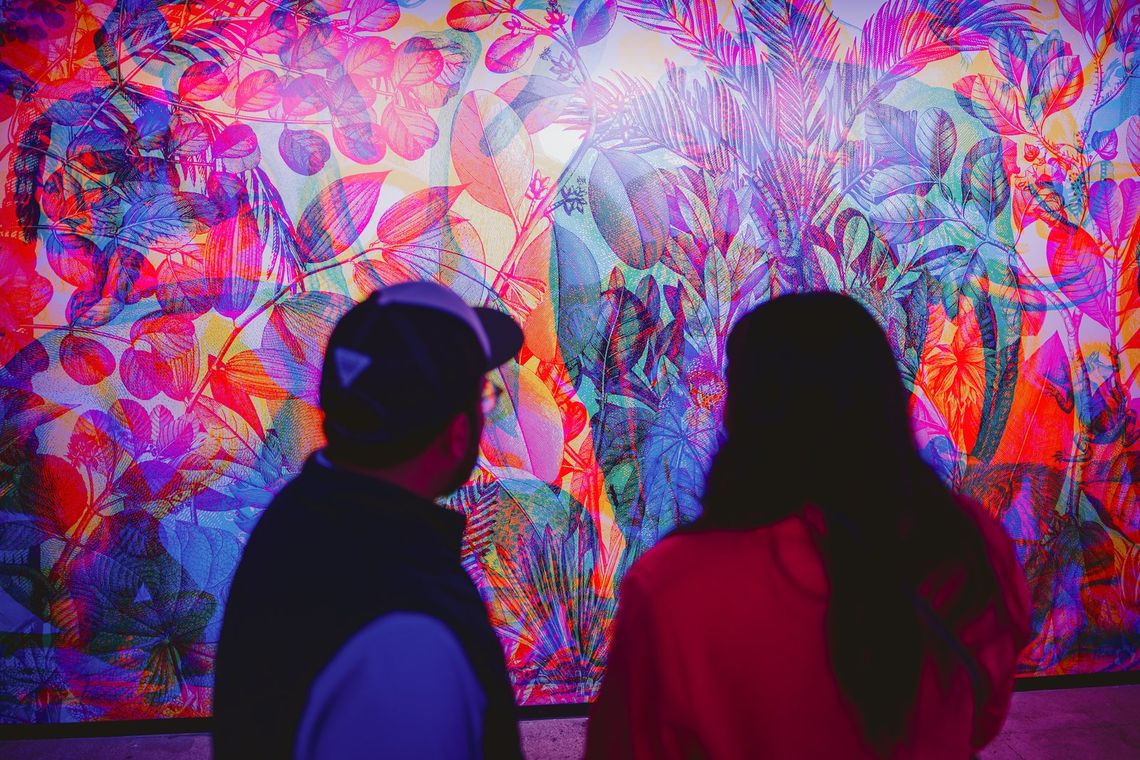
Onion Skin, at both Hopscotch locations, is part of his Echolyse series. Two walls meet at a right angle. Video is projected across them, and 5.1 surround sound pulls you in. From most angles it reads as layered chaos. Stand in the right spot and the distorted shapes lock into something deliberate and hypnotic, layers nested inside layers, as the title suggests. It runs fourteen minutes in four parts. People move slowly, testing vantage points, and it is one of the more contemplative exhibits in either city.
Onion Skin debuted in the ethnobotanical garden of Oaxaca, Mexico, at the Proyecta Oaxaca festival, and has toured since 2013, from Rio de Janeiro to Lyon. The geometry under it all is Renaissance perspective: 500-year-old math, run through a projector.