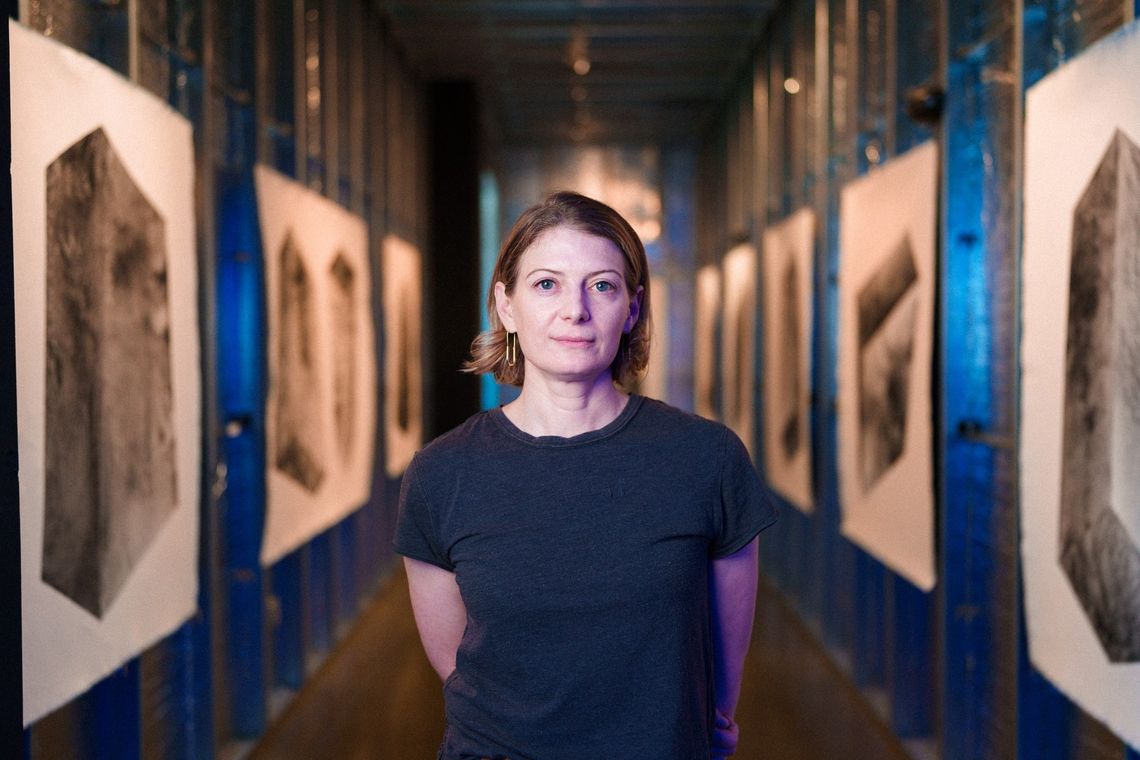
Seth Nehil has been making art out of sound since 1990, and he is still finding new ways to make a space feel alive. Based in Portland, he works across composition, electronic music, multichannel sound exhibits, and video, with a practice that has ranged from rubbing glass tubes together in a studio to programming eight-channel surround systems you feel in your chest. His interests run to synesthesia, psychoacoustics, and site-specific listening: what happens to a sound when it has a particular space to live in.
The space is part of the instrument.
He earned his MFA at Bard College under Maryanne Amacher, one of the most radical sound artists of the twentieth century, and her ideas about speaker placement and the physics of listening space run through everything he builds. His debut album, "Tracing the Skins of Clouds" (1998), was chamber music for found objects: glass tubes, bricks, plastic buckets, wine glasses, chimes. More than a dozen albums have followed, alongside long-running collaborations with John Grzinich in Estonia, Bruno Duplant in France, and Olivia Block in Chicago. He teaches sound at Portland State University, runs the video production company Paradise Meow, and still plays live; the Portland Mercury called a recent set "tastefully minimalist soundscapes flirting with the idea of being danceable."
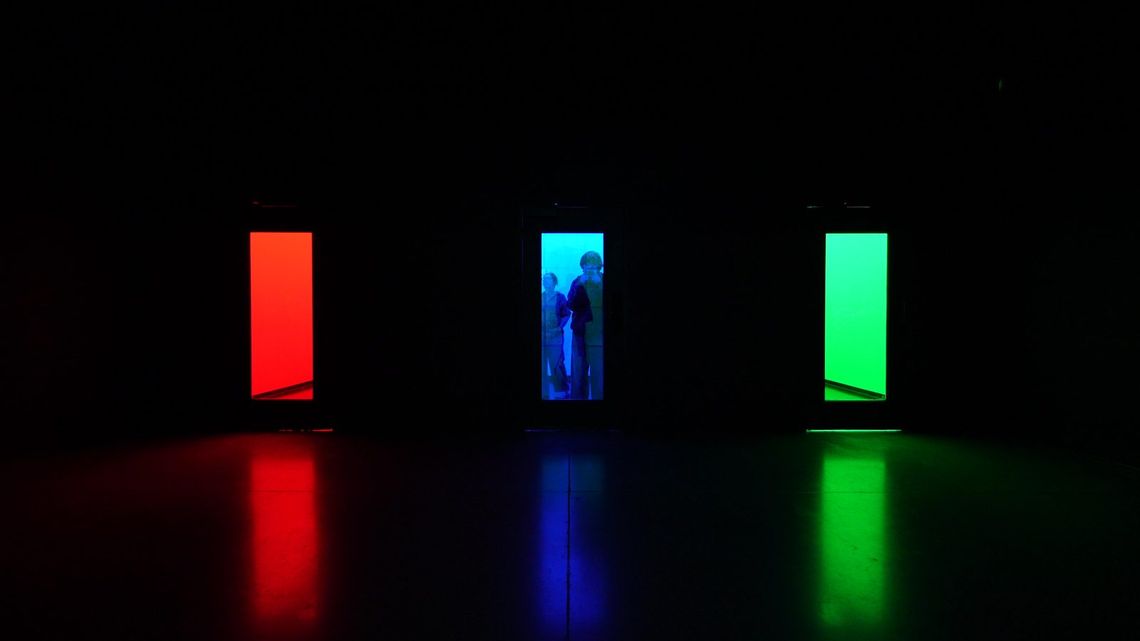
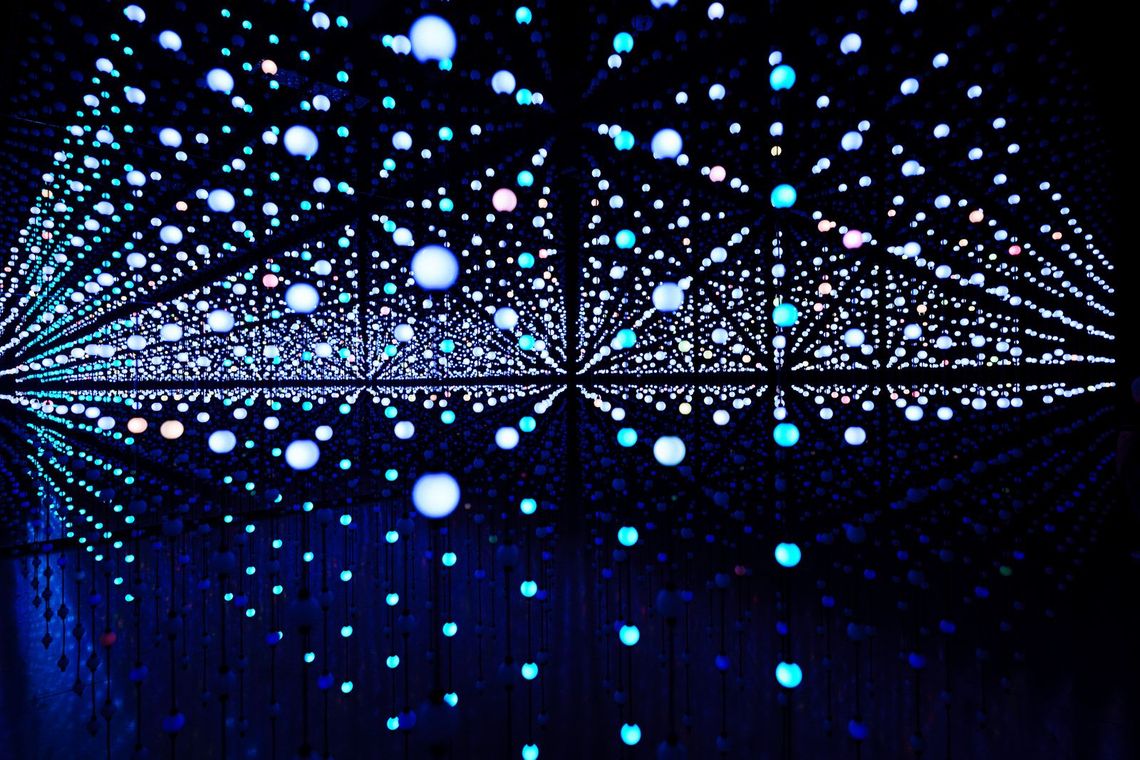
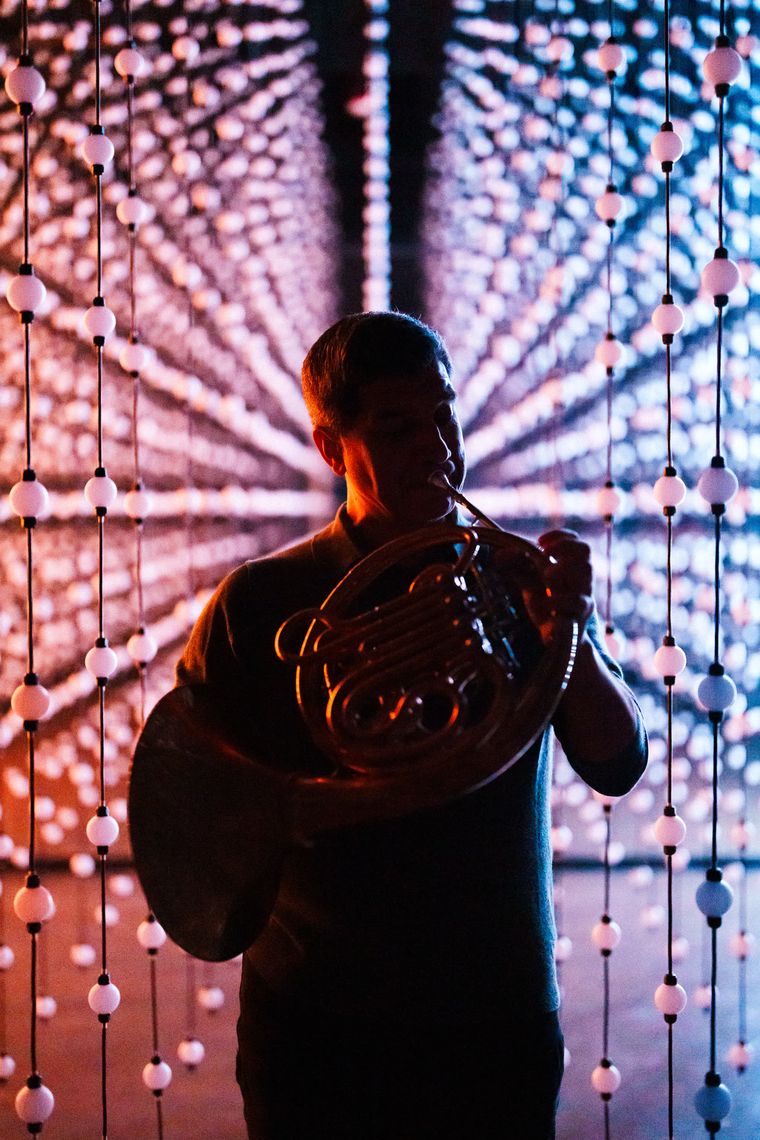
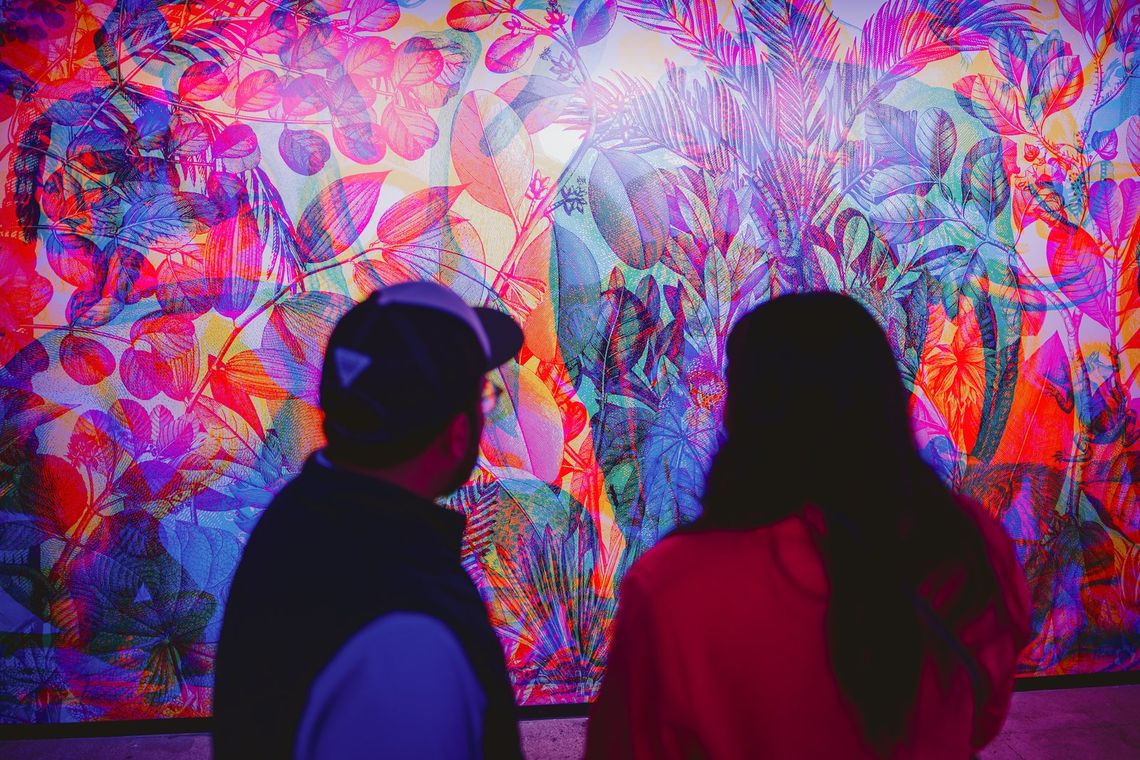
At Hopscotch Portland, Chromesthesia is three chambers, three saturated colors, and a six-speaker generative composition that shifts every time someone opens a door. Deep tones pulse and layer over field recordings of wind, ice, and birds, and the two-way mirrors in the doorways let you watch yourself soaked in color while you listen. People slow down in there. He also composed the five-minute score for Unknown Atmospheres, the mirrored light exhibit built with Parallel Studio at both Hopscotch locations: surround sound synchronized to 11,000 bulbs in San Antonio and 7,000 in Portland, with low frequencies you feel through the seat.
Each of those soundtracks took him six months to write. For Unknown Atmospheres, that is six months of work for five minutes of loop.